How to Sell a Houston Home When You're Going Through Probate
Losing a loved one is hard enough. Discovering that you're now responsible for navigating the legal process of settling their estate — including deciding what to do with a home — adds a layer of complexity that most people aren't prepared for. If you've found yourself in this situation, you're not alone, and the process is more manageable than it might feel right now.
Probate is something a lot of Houston families deal with, and selling a home during or after probate is more common than most people realize. But it works differently from a standard home sale — and understanding how before you make any decisions can save you significant time, money, and frustration.
Here's a complete guide to probate in Texas, what it means for selling a home, and what your real options look like every step of the way.

What Is Probate and Why Does It Matter for Selling a Home?
Probate is the legal process through which a deceased person's estate is administered and distributed. When someone dies owning real property in Texas — a house, land, or other real estate — that property typically has to go through probate before it can be sold or transferred to heirs.
The purpose of probate is to establish legal authority over the estate, confirm the validity of any will, pay outstanding debts and taxes, and transfer ownership of assets to the rightful heirs or beneficiaries. Until that process is complete, no one has the legal authority to sell the property — even if the heir is obvious and everyone is in agreement about what should happen.
This is why probate matters so much when a home is involved. The home may be sitting vacant, accumulating property taxes and maintenance costs, while the legal process works its way through the court system. Understanding the timeline and what's required at each step helps you plan accordingly.
How Probate Works in Texas — A Step by Step Overview
Texas has its own specific probate laws, and the process here is somewhat different from other states. Here's how it typically unfolds.
Step 1: Filing the Application
Probate begins when someone — typically the executor named in the will, or an interested party if there's no will — files an application with the probate court in the county where the deceased lived. In Houston, that's Harris County Probate Court.
The application asks the court to admit the will to probate (if there is one) and to appoint an executor or administrator to manage the estate. Filing fees and the specific documents required vary by county and circumstance.
Step 2: The Court Hearing
After the application is filed, the court schedules a hearing — typically within two to four weeks. At the hearing, the judge reviews the application, confirms the validity of the will if one exists, and officially appoints the executor or administrator.
This appointment is critical. The executor is the person with legal authority to manage the estate — including the authority to list and sell real property on behalf of the estate.
Step 3: Notice to Creditors
Once the executor is appointed, Texas law requires notice to be given to creditors of the estate. Creditors have a specific window of time to file claims against the estate for any outstanding debts. The executor is responsible for evaluating those claims and paying valid ones from estate assets.
This step can affect the timing of a home sale — particularly if there are significant outstanding debts that need to be resolved before the estate can be fully settled.
Step 4: Inventory and Appraisement
The executor is typically required to file an inventory of the estate's assets with the court — including real property — within 90 days of being appointed. This inventory establishes the official value of the estate for legal and tax purposes.
Step 5: Managing and Distributing the Estate
Once creditors have been addressed and the inventory is filed, the executor works to distribute the estate's assets according to the will — or according to Texas intestacy laws if there's no will. For a home, this typically means either transferring it to the heirs or selling it and distributing the proceeds.
How Long Does Texas Probate Take?
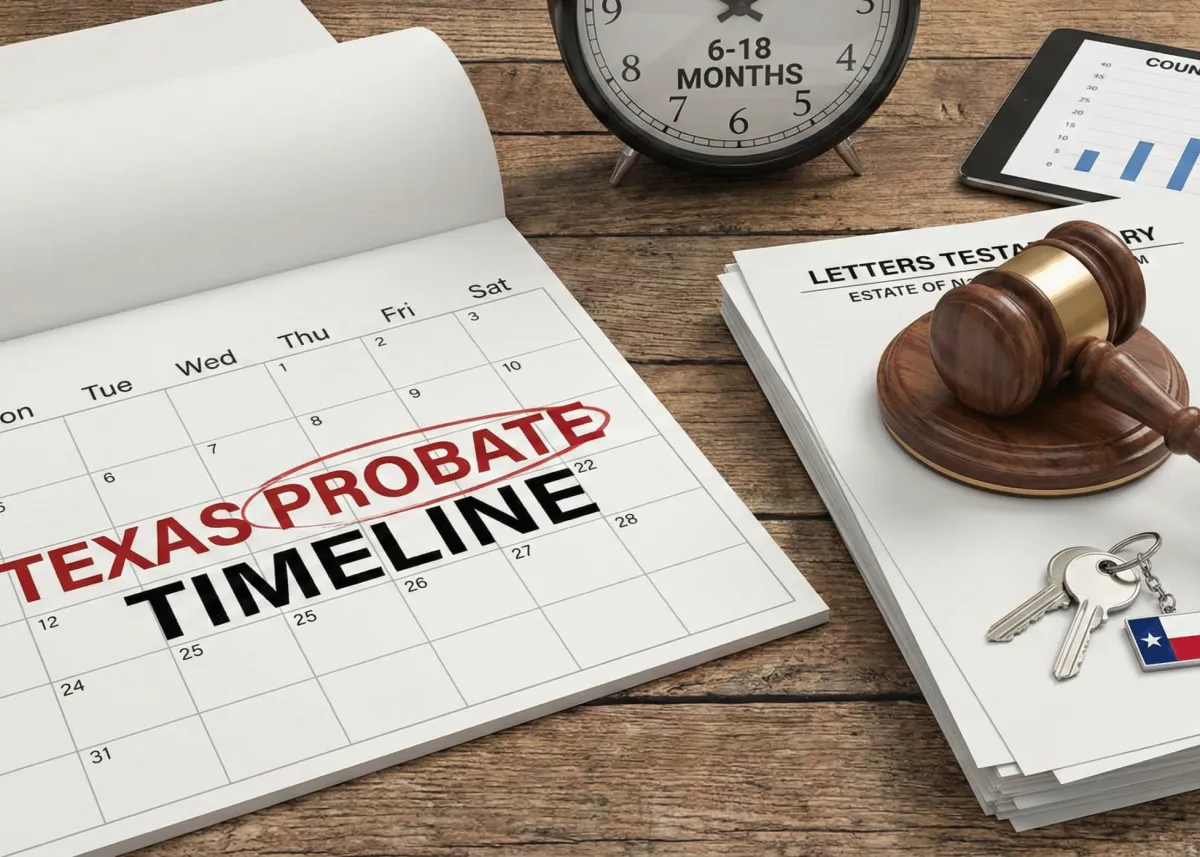
This is the question most families want answered immediately — and the honest answer is that it varies. A straightforward probate in Texas with a clear will, cooperative heirs, and no significant complications can be completed in as little as two to four months. More complex estates — contested wills, multiple heirs in disagreement, significant debts, or title complications — can take a year or longer.
The good news is that in many cases, a home can be sold during the probate process rather than waiting for it to fully conclude — which we'll cover in detail shortly.
When There's No Will — Intestate Succession in Texas
If your loved one passed away without a will — called dying intestate — the process is more complicated. Texas intestacy laws dictate who inherits what, following a specific hierarchy of heirs based on family relationships. A spouse, children, parents, and siblings each have defined rights under Texas law depending on who survives.
Without a will, the court has to determine who the legal heirs are before anyone has authority to act on the estate — including selling property. This process, called an heirship determination, adds time and legal complexity to the probate process.
If you're dealing with an intestate estate in Texas, working with a probate attorney from the start is strongly recommended. The legal questions involved are significant enough that trying to navigate them without professional guidance typically creates more problems than it solves.
Texas Alternatives to Full Probate
Not every estate has to go through the full probate process in Texas. Depending on the circumstances, there may be faster alternatives worth exploring with a probate attorney.
An affidavit of heirship is a document signed by people who knew the deceased and can attest to the family relationships and rightful heirs. For straightforward situations with clear heirs and no disputes, this can sometimes be used to transfer real property without going through full probate — though not all title companies will accept it, which matters when it comes time to sell.
A muniment of title is a simplified probate process available in Texas when the deceased left a valid will, there are no unpaid debts (other than a mortgage), and the only asset to be transferred is real property. It's faster and less expensive than full probate but only applies in specific circumstances.
A small estate affidavit applies when the total value of the estate — excluding homestead property — is $75,000 or less. It's a simplified process but comes with specific requirements and limitations.
Whether any of these alternatives apply to your situation depends on the specifics of the estate. A Texas probate attorney can tell you quickly whether a shortcut is available or whether full probate is required.
Can You Sell a Home During Probate — Before It's Finished?
This is one of the most common questions Houston families have — and the answer is often yes, with the right circumstances and proper court authorization.
In Texas, an executor with "independent administration" authority — which is granted in most wills and sometimes by court order — can sell estate property without getting court approval for each transaction. This is one of the most distinctive and helpful features of Texas probate law. Independent administration significantly speeds up the process of selling a home because the executor doesn't have to go back to court every time they want to take action.
If the executor only has "dependent administration" authority — which is less common but does occur — they need court approval before selling property. This adds time and legal steps to the process but doesn't make a sale impossible.
The key takeaway is that selling during probate is frequently possible in Texas — often much sooner than families expect. Understanding what authority the executor has is the first step in determining the timeline for a potential sale.
The Challenges of Selling a Probate Home the Traditional Way
Once the executor has the authority to sell, the path forward involves the same basic options any seller faces — but with additional complications that make a traditional listing harder than it sounds.
The home has often been vacant for months by the time selling becomes possible. Vacant homes accumulate maintenance issues, attract pests, and can deteriorate faster than occupied ones — particularly in Houston's humid climate. A home that sat empty through a Houston summer while probate worked its way through court may need significant attention before it's ready for the market.
Most probate homes haven't been updated in years. The deceased may have lived there for decades, and the home reflects that — original kitchens and bathrooms, older systems, deferred maintenance. Getting a probate home market-ready typically requires meaningful investment in repairs and updates.
The executor may not live nearby. Managing a traditional listing — coordinating with agents, overseeing repairs, being available for showings, responding to offers — is significantly harder when the executor lives in another city or state.
Multiple heirs can complicate decision-making. When several people inherit a property together, agreeing on an agent, a list price, a repair budget, and an acceptable offer requires consensus that isn't always easy to reach — especially when heirs are grieving and relationships are strained.
There's ongoing cost while the home sits. Property taxes, insurance, utilities, and maintenance on a vacant home keep accumulating throughout the listing process. In Texas, those costs are not small.
Why a Cash Sale Works Well for Probate Properties
For a lot of Houston families navigating probate, selling directly to a local cash buyer is the option that makes the most practical sense. Here's why it fits the probate situation so well.
No repairs or updates required before selling. The home is purchased as-is — deferred maintenance, dated finishes, and all. The executor doesn't have to spend estate money fixing the property up before it can be sold, and no one has to manage a renovation project from out of state.
No lengthy listing process to manage. A cash sale requires a single walkthrough rather than weeks of showings. The executor doesn't have to coordinate repeated access to the property or keep it in show-ready condition for months.
Faster closing. A cash sale can close in as little as one to two weeks once the executor has the legal authority to sell. That speed stops the accumulation of carrying costs — taxes, insurance, utilities — that eat into the estate's value while a traditional listing drags on.
Simpler decision-making for multiple heirs. A straightforward cash offer with a clear number and a clear timeline is easier for a group of heirs to evaluate and agree on than a months-long traditional listing process with endless variables to negotiate.
The estate can be settled faster. The sooner the home is sold, the sooner the estate can be fully settled and the proceeds distributed to heirs. For families who have been in probate limbo for months, closing a cash sale and distributing the funds can feel like a genuine resolution.
Contents can be included. A cash buyer can purchase the home with belongings left inside — furniture, personal items, household contents. Heirs take what's meaningful to them and leave the rest. No estate sale required, no expensive junk removal, no coordinating a cleanout from another state.
What the Process Looks Like at sellhomerequest.com
If you're the executor or an heir of a Houston property going through probate and you're ready to explore your options, here's what working with us looks like.
Reach out and share the basics about the property and where things stand in the probate process. You don't need to have everything figured out — just tell us what you know and we'll take it from there.
Receive a cash offer within 24–48 hours. Based on the home's current condition and the Houston market. No obligation to accept, no pressure to decide on the spot.
We work around the probate timeline. If the executor already has authority to sell, we can move quickly. If there are additional legal steps needed before the sale can close, we'll work with your timeline and coordinate with your probate attorney as needed.
Close through a licensed Texas title company. Everything is handled officially and correctly — the deed transfer, any outstanding liens or taxes paid from proceeds, and the net funds distributed to the estate. Clean, documented, and done.
Is a Cash Sale the Right Move for Your Probate Property?
It's worth seriously considering if any of these apply to your situation. The home needs repairs or updates that no one wants to manage or pay for. The executor or heirs live out of state and can't easily oversee a traditional listing. Multiple heirs need a simple, agreed-upon path forward. The estate needs to be settled as quickly as possible. The ongoing carrying costs of the vacant home are adding up and eating into the estate's value.
And as always — getting a no-obligation cash offer costs nothing. It gives everyone involved a real number to evaluate and compare against what a traditional listing might realistically net after repairs, commissions, carrying costs, and a longer timeline.
Navigating probate in Houston and trying to figure out what to do with a property? Get a no-obligation cash offer at sellhomerequest.com — we have experience working with executors and heirs through the probate process, and we'll give you honest answers about what's possible for your specific situation. No pressure, no runaround, just a clear path forward when you're ready.